Wednesday, 31 January 2018

NHL Expansion - Part 8 Summary


Image result for nhl divisions map
Right now, it appears Seattle has the best chance of landing an NHL expansion team. If that fails, they still have a good chance at relocating an existing one (Coyotes take note).
Giving Seattle an NHL franchise would pose the problem the Pacific Division would be home to nine NHL teams, meaning one of the existing teams has to move to the Central. That’s all very well and good but who do you move? Let’s ignore the teams on the Pacific coast (LA/Anaheim/San Jose, Seattle/Vancouver) as those are the teams farthest West. Moving Edmonton or Calgary means splitting the Alberta rivals which just isn’t going to happen (unless Calgary to relocate of course), meaning one of Phoenix or Vegas has to move. Technically the Coyotes are the team to the East, but would you want to be in a division that has most teams in the mid-west region and your closest neighbours are in Denver and Dallas? It certainly poses a problem for sure and of course Phoenix could end up relocating anyway.
 
For argument’s sake lets imagine Houston, having missed out on an expansion berth decided to offer the Coyotes an arena they have been trying to land for a while now. The Coyotes move to the lone star state and become the ‘Houston Aeros’. Solving the Divisional issues in one fell swoop.
 
I resent Carolina having an NHL team, there I’ve said it. They should never have stolen the Whalers from Hartford in 1997 in the first place and common sense should prevail in taking them back to their rightful home. It’s never going to happen but what if Quebec throw their new arena and loyal fan base at the new ownership tandem and it proves too good a deal to turn down. Carolina struggle to get 11,000 fans to games, Quebec have been waiting far too long and will pack out their arena. Bettman, just give them back their Nordiques already!
 
Finally, the Islanders. You’ve sucked for over 30 years, The Nassau Colliseum was outdated and Uniondale too far from Manhattan to make it work there again. The Barclay Center is possibly the worst hockey venue in North America let alone the NHL. With options running out the Islanders realise it’s teams to leave New York and move to Connecticut, just a stone throw away from the Empire State, to give Hartford their Whalers back.
 
Obviously, this is all if’s, buts and maybes and is totally my own opinion. I have ruled out Calgary and Ottawa from relocating but who knows what might happen to them. The Senators could move to Quebec? Calgary could move to Houston, Kansas City or even Saskatoon. And let’s not forget another struggling franchise left off this list, that of the Florida Panthers. They could still relocate so let’s not rule them out.
 
With a couple of divisional moves, here is how a post expansion/relocation NHL could look with 32 teams:
 
Metropolitan – Pittsburgh Penguins, Hartford Whalers, Columbus Blue Jackets, Buffalo Sabres, NY Rangers, New Jersey, Washington Capitals, Philadelphia Flyers.
 
Atlantic – Detroit Red Wings, Toronto Maple Leafs, Quebec Nordiques, Montreal Canadiens, Tampa Bay Lightning, Florida Panthers, Ottawa Senators, Boston Bruins.
 
Central – St Louis Blues, Chicago Blackhawks, Winnipeg Jets, Minnesota Wild, Dallas Stars, Houston Aeros, Colorado Avalanche, Trashville Predators.
 
Pacific – San Jose Sharks, Seattle Metropolitans, Los Angeles Kings, Vancouver Canucks, Edmonton Oilers, Calgary Flames, Anaheim Sucks, Vegas Golden Knights.


NHL Expansion - Part 7 - Other Hockey Cities


The five largest metropolitan regions without NHL franchises are
1 Houston
2 Atlanta
3 Seattle-Tacoma
4 San Diego
5 Baltimore
 
Other cities that have hosted major professional hockey teams
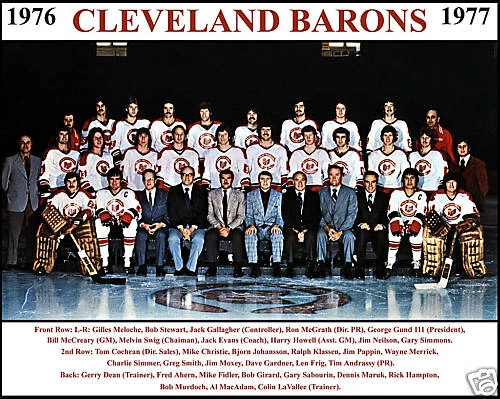
Image result for cleveland baronsImage result for cleveland barons
Cleveland - During the 1970s, Cleveland was home to the Cleveland Barons (the former Oakland Seals), which failed to draw fans or revenue, and was merged with the Minnesota North Stars (now the Dallas Stars) after two seasons.
Cleveland does have an NBA arena (Quicken Loans Arena), that is capable of hosting NHL games. Cleveland, which had a failed franchise for only two seasons, is unlikely to receive a team due to its close proximity to the existing NHL franchise in Columbus, southwest of Cleveland via Interstate 71.
Image result for atlanta flamesImage result for atlanta thrashers
Atlanta - The Atlanta Flames joined the NHL in 1972 and played in the city for eight years before being moved to Calgary in 1980 and becoming the Calgary Flames. The Atlanta Thrashers played in the NHL from 1999 to 2011 until their move to Winnipeg for the 2011–12 season.
Image result for atlanta thrashers
Atlanta's Philips Arena was formerly capable of hosting NHL games; the arena has not been used for hockey since the Thrashers' relocation in 2011 and is currently undergoing renovations in order to optimize its sightlines for basketball, leaving the arena less than suitable for the NHL. Should the NHL return to Atlanta for a third time, the next largest hockey-ready arena in Metro Atlanta, the Infinite Energy Arena in Duluth, currently the home of the ECHL's Atlanta Gladiators, is unsuitable for long-term use by a prospective NHL franchise due to being undersized at 11,300 seats.
Image result for kansas city scoutsImage result for kansas city scouts
Kansas City - The Kansas City Scouts joined the NHL in 1974 and relocated to Denver after two unsuccessful seasons, becoming the Colorado Rockies in 1976. The Rockies subsequently moved to the New York/New Jersey region to become the New Jersey Devils in 1982.

Kansas City, Missouri has hosted NHL hockey before. The Kansas City Scouts played in Kemper Arena from 1974 until 1976. The team averaged only 8,218 in attendance per game in the 17,000-seat arena, leading to the team's sale and relocation to Denver to become the Colorado Rockies. Professional hockey continued at the arena in the form of the minor league Kansas City Blues, followed by the Kansas City Blades and the Kansas City Outlaws. The ECHL's Kansas City Mavericks currently play at the suburban Silverstein Eye Centers Arena in Independence, Missouri.
Kansas City opened an NHL-ready arena named the Sprint Center in 2007. The arena is managed by the Anschutz Entertainment Group (AEG), which owns the Los Angeles Kings, among other sports interests. In 2007, when the Pittsburgh Penguins faced financial troubles and no prospect of a new arena, the president of AEG offered to relocate the team to Missouri to play in the new Sprint Center rent-free and to become managing partners in the facility. The Penguins, however, remained in Pittsburgh and got their new arena in 2010.
Kansas City sports investor Lamar Hunt Jr. called the NHL's $500 million price tag for an expansion franchise "a ridiculously big fee," and said that he is not aware of anyone in Kansas City who will make a push for a team. Neither he nor Cliff Illig, co-owner of MLS's Sporting Kansas City, have any intention of bidding in the NHL expansion window.
Image result for kansas city arena
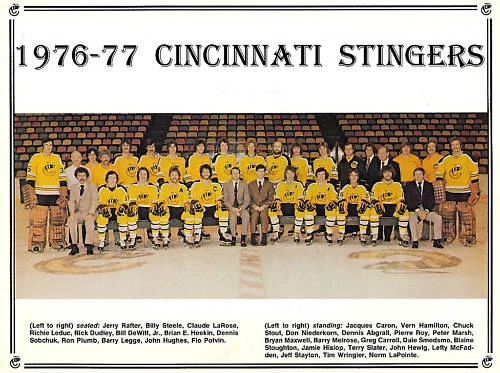
Cincinnati - The Cincinnati Stingers of the World Hockey Association (WHA) existed from 1974 until 1979, and were the final cut from the WHA/NHL merger of 1979 despite having a loyal fanbase.
Among NBA cities lacking an NHL franchise, Portland (Moda Center), and Orlando (Amway Center) have arenas capable of hosting NHL games. However, Orlando would be unlikely to receive a franchise due to its close proximity to Tampa and its franchise via Interstate 4. Other arenas are specifically designed for NBA franchises such as San Antonio's AT&T Center.
Image result for cincinnati stingersImage result for cincinnati stingers
Milwaukee – The City has been considered at times for an NHL team due to the popularity of hockey in Wisconsin; the city's BMO Harris Bradley Center, scheduled to be replaced by the Wisconsin Entertainment and Sports Center in 2018, had the capacity to host an NHL team, and the notion has garnered support from players. However, Milwaukee has never received a team due to its small market already being home to multiple major pro teams – in addition to the Milwaukee Brewers and Milwaukee Bucks, the market also de facto supports the Green Bay Packers – and (by some observers) its close proximity to Chicago and the Chicago Blackhawks wanting to protect its market. The Milwaukee area already hosts the NHL Nashville Predators' American Hockey League-affiliated development team, the Milwaukee Admirals.
Baltimore - Originally was a "backup" option had one of the Expansion Six not been able to launch in 1967, is today unlikely to get a team due to its close proximity to the Washington Capitals (who play preseason games in Baltimore annually) and Philadelphia Flyers; the main arena in Baltimore, Royal Farms Arena, is both undersized and outdated. Current proposals to replace the Royal Farms Arena don't have attracting an NHL or NBA team in mind.
During the 1990s, the Hampton Roads region of Virginia was in contention for an NHL expansion or relocation, which would have been known as the Hampton Roads Rhinos. Other cities such as Oklahoma City, San Diego, and Portland, Oregon, had expressed interest in landing an NHL team.

NHL Expansion - Part 6 Relocation


Relocation

With plenty of cities wanting a franchise now it does remain a possibility. Assuming Seattle does get the expansion team then Houston, Quebec and Hartford will all still want a team, leaving the only realistic option in relocating one of several teams currently suffering Arena issues. Failure to see these teams secure new long-term deals could see one of the waiting cities to pounce.
Image result for phoenix arizona
Phoenix - As of 2015, the leading candidate for relocation was the Phoenix Coyotes. The team has been unprofitable since its relocation to the Phoenix metropolitan area in 1996, and went bankrupt in the late 2000s. The league actively resisted selling the team to interests that would have relocated the team out of Arizona, and made numerous efforts to sell the team to owners that had intended to keep it in the state. The league convinced the eventual owners of the Winnipeg Jets to buy the Atlanta Thrashers instead of returning the Coyotes to their original home in Winnipeg.
None of the numerous prospective owners the league had hoped would buy the team, and keep it in Arizona, followed through on their sale until 2013, when IceArizona (a group led by George Gosbee) purchased the team. Within a year of that sale, IceArizona spun off the team to hedge fund manager Andrew Barroway. The Coyotes' lease on Gila River Arena was revoked in June 2015 due to concerns the lease was illegal under conflict of interest laws. The Coyotes intended to fight the revocation in court. The team had indicated that if it cannot stay at the Gila River Arena, it could move back to downtown Phoenix and the Talking Stick Resort Arena. On July 24, 2015, the Coyotes announced that Glendale City Council had enacted an agreement allowing the Coyotes to stay in the Gila River Arena for the next two seasons. With the arrival of the Vegas Golden Knights, the Coyotes will have a geographic rival within the Pacific Division and is believed will help the Coyotes long-term viability much like the Anaheim Ducks helped the Los Angeles Kings long-term.
Discussions of relocating the Coyotes haven’t ceased despite the league’s insistence the team is staying put.
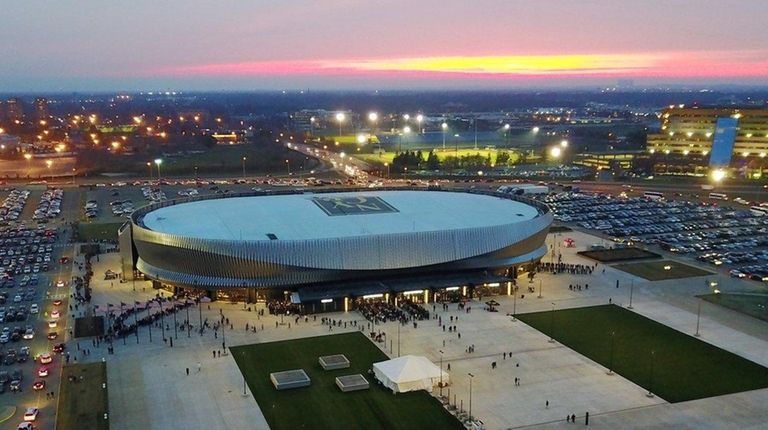
Image result for Nassau Veterans Memorial Coliseum
New York Islanders - Whose three-way split of a single metropolitan market with the New Jersey Devils and New York Rangers is unique among the major sports leagues in the United States and Canada. The Islanders' move from Nassau Veterans Memorial Coliseum to Barclays Center in 2015 failed to increase attendance, which dropped 11 percent from the previous season. As Barclays Center was not originally constructed to accommodate an NHL team, its capacity of 15,700 seats is low for the league, and 1,500 seats have an obstructed view. In addition to the attendance woes, the team's television ratings are also the lowest of the three New York metropolitan area teams and are in steep decline. The Islanders' new owners, who took over operations in July 2016, are initially seeking an in-market move, hoping to build a new arena adjacent to Belmont Park Racetrack in Elmont, New York with cooperation from the New York Mets and funding from the owners of their rivals, the Rangers.
If that fails to come into fruition, and seemingly the Barclay’s Center being inappropriate for hockey the Islanders will be left with two options; move back to the refurbished Nassau Veterans Memorial Coliseum in Uniondale, or find a new city (See the Hartford section above).
Image result for calgary
Calgary – The Flames are the latest team to worry about losing their team. Ever since the Detroit Red Wings moved into their new Little Caesar’s Arena in October the Flames’ Saddledome took on the mantle of being the oldest facility in the NHL.
According to the CBC website, A new $555 million arena has been proposed, but an argument between the CEO of the Flames and Mayor Naheed Nenshi after the City’s offer left the NHL side paying ‘120%’ of the project. Calgary Sports and Entertainment Corp. also announced they were no longer in talks with the city regarding an arena.
Nenshi said the city offered to divide the cost of building a new arena — in the Victoria Park neighbourhood in the east end near the existing Saddledome — three ways with the Flames and with arena users through a "fee/ticket surcharge."
The development favoured by the Flames — a proposed CalgaryNext complex on the west end of downtown that would have included a public fieldhouse and CFL stadium — was effectively killed by city council in favour of building a "Plan B" arena in Victoria Park.

The city released this diagram outlining its arena proposal. (City of Calgary)
Image result for city of calgary arena proposal
Nenshi said that the new arena to replace the aging Saddledome, seen here, would cost the city an estimated $185 million in direct costs and another $150 million in indirect costs. (CBC)
For CalgaryNext, the Flames' owners had offered $200 million of their money and proposed a $250-million loan to be repaid through a ticket surcharge, with taxpayers footing the rest of the bill.
Council disagreed with the CalgaryNext price tag, saying the project would cost approximately $1.3 billion when cleanup of creosote-soaked soil was included.
Image result for calgarynext arena and stadium
The Flames' proposed CalgaryNext, as pictured in this diagram, would have included a new arena, a public fieldhouse and CFL stadium in the West Village. (Calgary Flames)
Personally, I can’t see the Flames leaving Calgary and some sort of a deal/compromise will be reached keeping the team on Canadian Ice.
The full CBC article can be read here:
Image result for raleigh pnc arena
Carolina – The Canes were being rumoured to relocate to Houston just a few weeks ago, whilst Quebec seemed interesting in purchasing the team too, not to mention Hartford bringing the team back home to where it belongs. That all sounded great in theory but in practice we saw Tom Dundon, a Dallas businessman, buy a controlling interest in the team from Peter Karmanos Jr. who has owned the franchise since 1994, and is remaining as a minority owner.
In an interview with TSN after the meeting, Karmanos stressed that the team would remain in Raleigh and that it had been a condition of a sale. Karmanos said he will remain a part-owner in a team he brought to North Carolina in 1997.
“It was never really a consideration,” Karmanos said. “The league is not amenable to moving franchises at all.”
Asked by TSN why he had an interest in the Hurricanes, Dundon said, “Pete and I built a relationship. We want to work together, so we’re thinking about it.”
Karmanos joined his former business partner, the late Thomas Thewes, in buying the Harford Whalers in 1994 – former general manager Jim Rutherford also had a share of the team – and relocated the franchise to Raleigh in 1997. Renamed the Carolina Hurricanes, the team moved into PNC Arena in 1999, reached the Stanley Cup final in 2002 and won the Stanley Cup in 2006.
In recent years, Karmanos first looked to add investors in the Canes, then to sell a controlling interest in the team. A group headed by sports attorney Chuck Greenberg put together a term sheet that had Karmanos’ approval, but Greenberg had trouble lining up enough investors to meet Karmanos’ selling price –between $450 million and $500 million, Karmanos said.
Dundon, a billionaire, served as CEO and president of Santander Consumer USA, one of the nation’s largest subprime auto lenders, until July 2015. It was reported by Auto Finance News this month that Santander Consumer, which Dundon founded in 1995, agreed to pay Dundon more than $700 million in an exit deal.
Dundon is managing partner at Dundon Capital Partners LLC and CEO and president of Dundon Capital Acquisition Corp. in Dallas.
Dundon was one of the developers in the creation of Trinity Forest Golf Club in southeast Dallas. The course was designed by Ben Crenshaw and Bill Coore, who oversaw the many changes to Pinehurst No. 2 before the 2014 U.S. Open and U.S. Women’s Open.
Being from Texas may have leant some more weight behind a move to Houston but for now the team is sadly staying where it is.
Related image
Ottawa – Surprisingly the Senators are the latest team to be brought into the Arena/Relocation equation. I say surprisingly as the Canadian Tire Centre was only built in 1992 and having visited myself recently can hardly say it is out-dated. The big problem the facility has is its location in Kanata, some miles west of Downtown Ottawa which can affect attendances. Then again that could just be the Senators boring style of hockey they insist on playing, so who knows. Either way though it has raised the question about the team’s future on the city.
Ottawa Mayor Jim Watson seems in favor of a new Senators arena at LeBreton Flats, copying the idea Edmonton used when moving into their new facility recently.
The city of Edmonton committed more than $300 million to partner with Oilers' owner Daryl Katz, who last year sold his Rexall chain for $3 billion, to fund a new arena and downtown development. 
But at least Edmonton has a scheme to recoup some of that money from increased property taxes. Quebec City split the $400-million cost of the Centre Vidéotron with the province, in order to lure the Nordiques back to town. Instead, the latest NHL expansion team was awarded to Las Vegas.
There are a few instances where NHL arenas were funded privately, but they are in markets much larger — and more lucrative — than Ottawa's. Think New York City or Toronto — although even Air Canada Centre got millions worth of public infrastructure financing and federal land at well below market value.
Economist Glen Hodgson said:
"This has been a distorted market for a very long time now. Once one city goes in there and is prepared to offer either tax-free bonds in the U.S., or a bit of city financing out of a city budget in Canada, that becomes the ticket for entry."
Is it a price that the people of Ottawa are willing to pay to have an arena downtown?
Whatever happens at LeBreton will have a major impact on the city, whether it's operating public amenities or making changes to the LRT station. Most people, even if they aren't ardent Sens fans, understand why a downtown arena located on rapid transit makes sense for both the franchise's success and for city building.
To read more on the Ottawa arena debate check out this article by CBC:
 
And the Ottawa Citizen:
 Related image


NHL Expansion - Part 5 Other Canadian Options


Bettman denied that the NHL is considering relocating any of its current 31 teams, but there are also a number of franchises with uncertain arena situations, including the Coyotes, Islanders, Flames, and Senators. The league could also add a 32nd club to rebalance after expanding to Las Vegas this year. The Golden Knights paid out a $500 million expansion fee to enter the league.
Other Options
Canada
The potential of adding additional franchises in Canada had been an on going source of controversy for the NHL in recent years as numerous groups proposed expanding the league into a new Canadian city, or purchasing a struggling American franchise and relocating it north; to a certain extent, these issues continue even after the Atlanta Thrashers relocated to Winnipeg, becoming the country's seventh active team. Quebec City and the Golden Horseshoe area of Southern Ontario are most frequently proposed as locations for new Canadian teams, as was Winnipeg prior to the announced relocation of the Thrashers. However there have even been mentions of teams in Saskatchewan and Nova Scotia.

Hamilton

Image result for hamilton ontario
Hamilton mayor Jack MacDonald attempted to lure the Colorado Rockies to Hamilton in 1980, an effort that ended when he lost his re-election bid. Hamilton was also a candidate for expansion in 1990, being one of the favorites, but it lost out to the Ottawa Senators and Tampa Bay Lightning. Hamilton's bid group attempted to negotiate the $50 million expansion fee; a condition the NHL rejected. While it was speculated that the Toronto Maple Leafs and Buffalo Sabres did not want an NHL team in Hamilton due to territorial competition, former league president Gil Stein has denied that was the case. In 1985, the Copps Coliseum was built to try to make that happen.
BlackBerry founder and former co-CEO Jim Balsillie has made several attempts to purchase an existing NHL team with the purpose of bringing it to Southern Ontario. He signed an agreement in principle to purchase the Pittsburgh Penguins for US$175 million on October 5, 2006.  Penguins' majority owner Mario Lemieux agreed to the sale after struggling to gain support from local governments to build a new arena. Balsillie's purchase agreement offered to help finance a new arena, but also contained a stated intention to relocate the team to Hamilton or Kitchener-Waterloo if no deal on a new arena could be reached. Balsillie later retracted his bid, claiming that the NHL had placed conditions on the sale that he was not comfortable with, including a commitment to keep the team in Pittsburgh under any circumstances.
Balsillie then reached an agreement to purchase the Nashville Predators for $238 million on May 24, 2007, and began a season ticket campaign in Hamilton a week later intending to prove that the city was capable of hosting an NHL team. Thousands of fans purchased tickets, however the sale again fell through a month later when Predators owner Craig Leipold terminated the agreement. The Predators were later sold to a group of ten investors, led by Nashville businessman David Freeman, who promised to keep the team in Nashville. Leipold accepted $40 million less from Freeman's group than Balsillie offered, and later ended up as the majority owner of the Minnesota Wild.
During the 2008–2009 NHL season, the future of the Phoenix Coyotes was on shaky ground as the team expected to lose as much as $45 million, and the league had to step in to assist with paying the team's bills. Coyotes' managing partner Jerry Moyes filed for Chapter 11 bankruptcy protection in early May 2009. Immediately afterwards, an offer by Balsillie to purchase the team was made public. The NHL challenged the Coyotes' ability to file for bankruptcy, claiming that as a result of the financial support the league had been offering the franchise, the league itself is in control of the team, and that Moyes did not have authority to act as he did. Balsillie launched a public relations campaign aiming at igniting Canadian nationalistic feelings and the perception that Bettman had an anti-Canadian agenda, including a website. His bid to purchase the Coyotes failed as the bankruptcy judge ruled his offer did not meet the NHL's rules on relocation.
The Hamilton Spectator reported in May 2009, that a Vancouver-based group led by Tom Gaglardi was planning to make a bid to purchase the Atlanta Thrashers and relocate the team to Hamilton in time for the 2010–11 NHL season. This never materialized, and the idea was eventually rendered moot by the Thrashers' sale and relocation to Winnipeg. Gaglardi later purchased the Dallas Stars and kept the team in Dallas.
Under NHL rules, an expansion or relocation of a team to Hamilton could potentially be blocked by the Buffalo Sabres or the Toronto Maple Leafs, because FirstOntario Centre, the likely venue for a Hamilton NHL team, is located less than 50 miles from the Sabres' and the Leafs' home arenas. Roughly 15% of the Sabres' business comes from residents of the area of Ontario between Hamilton and Buffalo, and the Sabres or the Leafs could require "an enormous indemnification payment" to allow an additional team to be established within a 50-mile radius. An unnamed bidder made a bid for the Sabres in February 2011, offering $259 million for the team to move it out of Buffalo, which would either mean the team would relocate to Hamilton or it would clear the way for another team to make such a move. The bid was rejected in favor of an offer from Terry Pegula, who planned to keep the team in Buffalo.
Image result for hamilton ontario copps coliseum
Greater Toronto Area - Although Toronto is already home to the Toronto Maple Leafs and that team's AHL development team, the Toronto Marlies, its suburbs have been mentioned as potential sites for an NHL franchise, under the premise that the Greater Toronto Area, or GTA, is the most-populous metropolitan area in Canada and therefore could support two NHL teams. Unlike other potential expansion markets, a new arena would need to be constructed, and most of the proposals for a new Toronto area team include a new arena along with them.
In April 2009, a group of businesspeople met with NHL deputy commissioner Bill Daly to discuss the possibility of bringing a second NHL franchise into the Toronto area, most likely in Vaughan, Ontario. Despite the talks, Daly reportedly stated the NHL is "not currently considering expansion nor do we have any intention or desire to relocate an existing franchise." In June 2009, a group headed by Andrew Lopez and Herbert Carnegie proposed a $1 billion plan for a second Toronto team, called the Legacy, to begin play no earlier than 2012. The group announced a plan for a 30,000-seat arena, half of which would be priced at C$50 or less. The arena would be situated in Downsview Park in the north of the city. Twenty-five percent of net profits would be given to charity.
In 2011, a proposal surfaced to build a multi-purpose 19,500-seat arena in Markham, Ontario, northeast of Toronto, that could be used for an NHL team. The C$300 million arena is part of a proposed entertainment complex. The company behind the proposal, GTA Sports and Entertainment, is headed by W. Graeme Roustan. Roustan, a Montreal-raised private equity investor whose firm Roustan Capital, partnered with Kohlberg & Company and purchased Bauer from Nike, was also the chairman of Bauer. The proposed location for the arena is near the Unionville commuter train station on land owned by Rudy Bratty, chairman and CEO of Remington Group, an organization that is charged with the development of Markham's downtown. However, the GTA Sports and Entertainment Group did not file an application for expansion prior to the July 20, 2015 deadline.
Related image
Saskatoon - Bill Hunter, the founder of the Edmonton Oilers, had an agreement to purchase the St. Louis Blues and move the team to Saskatoon as the Saskatoon Blues in the 1983–84 NHL season; however, the NHL (which did not want to leave the St. Louis market) vetoed the sale. Faced with the prospects of either having to allow the sale or contract the franchise, the league found an owner (Harry Ornest) willing to keep the team in Missouri and, in an eleventh-hour deal, preserved the Blues in St. Louis, where they remain. Saskatoon again bid for a franchise during the league's early 1990s expansion, but the bid was considered a long-shot and was withdrawn before the league made its final decision.
A proposal from Ice Edge Holdings to purchase the Phoenix Coyotes would have moved a portion of the team's home games to Saskatoon in an effort to maintain the team's viability in its main home in Phoenix, similar to the former Bills Toronto Series arrangement in the National Football League; the group, had it bought the team, was ready to go forward and had leased Saskatoon's SaskTel Centre for five home games in the 2009–10 season. The group was believed to lack the funds to buy the team outright, but remained in contention as potential minority owner until May 2011, when it pulled out of negotiations. Some members of the Ice Edge group later joined the ownership group led by Canadian businessman George Gosbee who ultimately purchased the Coyotes and kept them in Arizona.
On Ice Management, an ownership group backed by auto racer, former Moncton Wildcats owner, and former professional hockey player John Graham, is backing a long-shot bid to bring the NHL to Saskatoon.  The Calgary Flames were scheduled to host the Ottawa Senators in Saskatoon, for a preseason game (sponsored by Graham) in September 2013; that game led to speculation that the city may host the Flames if the team's regular arena, Scotiabank Saddledome, which had been damaged in the 2013 Alberta floods, did not complete its repairs in time for the 2013–14 season. In the end, repairs were completed on a compressed schedule, and the Saddledome reopened in September 2013. Although neither Graham nor any other bidder representing Saskatoon placed a bid in the expansion window, the city will again host a neutral-site preseason game in 2015.
Related image


NHL Expansion - Part 4 Quebec


Quebec City

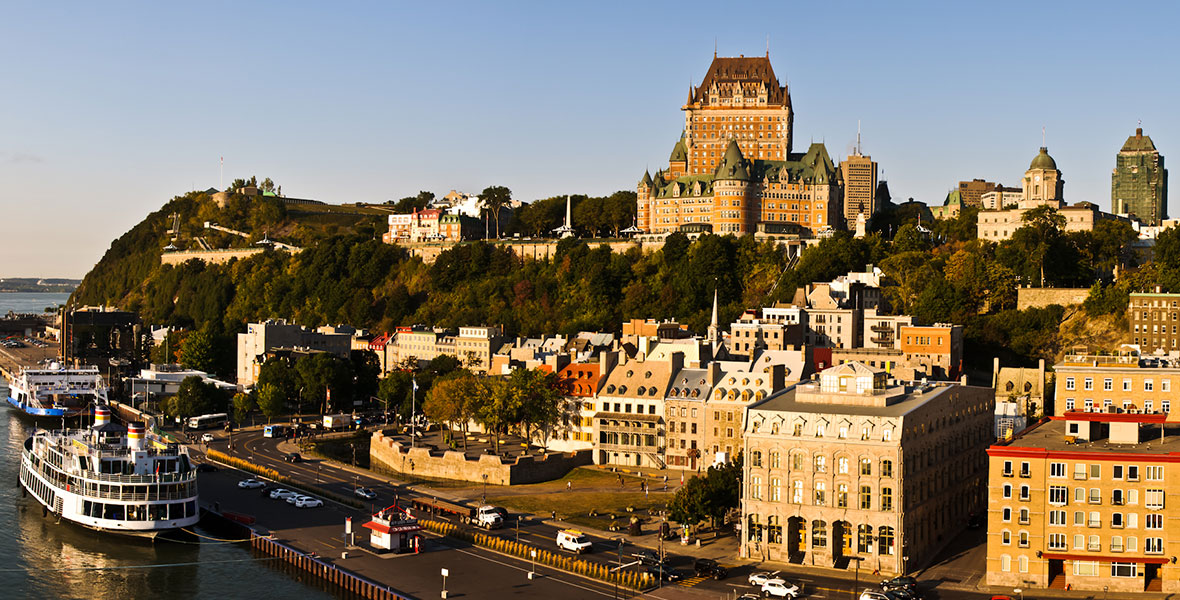
Image result for quebec cityWhile the Vegas Golden Knights continue to wheel and deal and fill out their roster, rabid hockey fans in Quebec City continue to wait for the return of the NHL.  
Arena - The good people of Quebec paid $370 million in tax money for an NHL arena a few years back, and they’re still waiting for a team to return. Patiently. As they do, the words of NHL commissioner Gary Bettman continue to echo in their ears. He never said the NHL was turning them down. He just said expansion was being “deferred, at least for the time being.” You heard that too, right? “They’re on our radar screen for another time, perhaps,” he said. “Another day when circumstances allow.” So, you’re saying there’s a chance!
Meanwhile, the Videotron Centre, an 18,259-seat arena, sits vacant most nights when the Quebec Remparts aren’t playing. Most nights. There was, of course, President’s Choice SuperDogs, which, according to the promotional material, is The Most Fun on Four Legs, so it has to be true, though the pictures just show a bunch of mutts jumping over stuff and skipping rope with humans. There was a one-night only appearance by Messmer, who apparently is so big in Quebec he goes by one name. On that night, he’ll try to break his own world record (we’re just going to take his word on that one) that he set last February in France when he simultaneously hypnotized 548 people in less than four minutes. This summer will see concerts from the likes of Iron Maiden, Keith Urban, and Bruno Mars.
If none of that attracts you, for just $4,400 you can rent the ice for two hours.
“It is possible for garage league teams, groups of friends and businesses to enjoy your favorite sport on the ice of the Videotron Centre,” the building’s website claims. And the Quebec Peewee Tournament should be exciting.

Image result for centre videotron
Hockey History - If you think this might be the most depressing, most inequitable, most ass-backwards thing you could ever conceive, you can’t be alone. When the NHL decided to accept Bill Foley’s $500 million in expansion money last June, it not only eschewed a market that did everything asked of it by the league, it also left waiting a hockey-mad city. And when we say hockey mad, we mean it.
“Quebec City’s love for hockey is close to mental illness,” said Jerome Landry, a local radio personality and one of the founders of Nordiques Nation, a fan club that boasted 90,000 members when it was established six years ago. “We’re completely crazy about the sport. I think we can be the Green Bay of hockey.”
So why not Quebec City? Well, when the NHL expanded in June one of the main reasons for choosing Las Vegas instead was that adding another team in the East while ignoring the West would have created a greater geographical imbalance between the two conferences, information that might have been useful to Quebec City before the process began. Bettman also cited the volatile Canadian dollar and the fact admitting two expansion teams at once would have strained the rosters of the 30 existing teams. Funny, that didn’t seem to be an issue when the league admitted Florida and Anaheim in time for the 1993-94 season and Minnesota and Columbus seven years later.
Quebec City has been home to two NHL hockey teams. The first, the Quebec Bulldogs, lasted from 1878 to 1920. They won the Stanley Cup in 1912 and ’13 and placed eight players in the Hall of Fame after which they moved to Hamilton, Ontario. The second, the Quebec Nordiques, called Quebec City their home from 1972 to 1979 in the World Hockey Association, and from then on to 1995 as a National Hockey League team, at which point they moved to Denver to become the Colorado Avalanche. Part of the challenge for both the Bulldogs and Nordiques was that Quebec City was by far the smallest market in the NHL. According to the Television Bureau of Canada, a prospective Quebec City team would now be in the league's second-smallest market, ahead of only Winnipeg. However, Silver's analysis suggested that the Quebec City market was comparable to those of Winnipeg, Buffalo, and Washington, D.C. in terms of avid hockey fans.
The 1979 defeat by a single vote of a merger agreement between the NHL and the rival World Hockey Association that would have resulted in three Canadian WHA franchises (the Edmonton Oilers, Quebec Nordiques and Winnipeg Jets) joining the NHL led to a mass boycott of Molson products across Canada. In a second vote, the Montreal Canadiens, owned by Molson, reversed their position, allowing the Oilers, Nordiques (who were owned at the time by then-rival brewery Carling O'Keefe) and Jets to join the NHL for the 1979–80 NHL season (along with the New England Whalers, who would be renamed the Hartford Whalers). The Calgary Flames became Canada's seventh franchise in 1980, relocating from Atlanta.
It also has a rich history of hockey at all levels, from the powerhouse Quebec Bulldogs to Jean Beliveau’s Quebec Aces senior team, to the Nordiques. Consider this: The Remparts, who play in the QMJHL, attracted an average of 13,835 fans per game last season. That bested the Carolina Hurricanes, Phoenix Coyotes and New York Islanders.
Image result for quebec nordiquesRelated image
Population - Check With a population of just more than 806,000, Quebec City would be a small NHL market. Like, miniscule. But it’s actually slightly larger than Winnipeg, which got its team back five years ago and is intent on never letting it go again. With just 59 corporate head offices, Quebec City is far down that list among NHL cities, with Ottawa next at 76. But with an unemployment rate under five percent, Quebec City has more of its population working and earning money than any of the seven Canadian NHL cities. In fact, its unemployment rate is almost half that of Calgary’s.
Image result for centre videotron quebec

Ownership - In May 2011, Labeaume stated that Pierre Karl Péladeau, then-president and CEO of Quebecor Inc., was in talks with the NHL regarding a franchise in Quebec City. He later became a politician for the Parti Québécois, a sovereignist political party in the province. In September 2012, then-Quebec premier Jean Charest (a member of the rival Liberal Party and whose government had invested in the new arena) claimed that the political aspect might hinder Quebec City's chances of getting the Nordiques back, saying that Bettman might be less likely to allow a team to move if sovereignists were in power.  According to Sports Illustrated, the league is wary of the Quebec sovereignty movement because of concerns that it could destabilize the Canadian dollar. However, Mayor Labeaume insists that Péladeau's involvement in politics will hinder neither the management of the new arena nor the negotiations over the return of the Nordiques.
On June 24, 2015, Quebecor announced that it planned to apply for an NHL expansion franchise, with the aim of bringing the Nordiques back to Quebec City. Nearly a month later, on July 20, 2015, Quebecor formally announced it had submitted an application to the NHL for an expansion franchise. On July 21, 2015, the NHL confirmed it had received an application from Quebecor. On August 5, 2015, it was announced that Quebec had moved on to Phase II of the expansion process. The bid subsequently advanced to Phase III, which ended on September 4.
Quebec City's 2015 bid on an expansion team, while not entirely ruled out, was significantly weakened after the Canadian dollar declined in value against its U.S. counterpart. As of June 2016, the Quebec City bid was said to be still being seriously considered, but not yet decided. The league ultimately decided to "defer" the Quebec bid until a later time. Centre Vidéotron was awarded some exhibition games leading into the 2016 World Cup of Hockey, an international tournament operated by the NHL, as well as a pair of NHL preseason games in successive years; on October 4, 2016 and September 18, 2017, between the Boston Bruins and Montreal Canadiens.
Image result for quebec nordiques

The Canadian dollar will rebound someday, the NHL will be aligned once it expands to Seattle, and the talent level will even out. And yet, Quebec City may never get an expansion team. Perhaps the best it can hope for is to become a modern-day Winnipeg – a city the NHL probably would have never chosen but was forced to return to. When the Atlanta Thrashers were leaving town quicker than a drunk with a string of bar tabs, the NHL needed a convenient landing place quickly, one that had a readymade facility and a fan base that didn’t need a course in Hockey 101. The league found it all in Winnipeg, and Quebec City fits that bill spectacularly.
“We all understand here that Quebec City is Plan B for the NHL,” Landry said. “I understand the league wants to see other markets like Las Vegas. I would’ve done the same if I were Gary Bettman. I would’ve tried to go to Vegas before the NFL and try to access this market. I know the NHL wants to go to Seattle. They want successful markets, and I understand why they want some markets and Plan Bs. That’s the business, that’s their business, and they’re right to do it.”
Lest you think Landry is some shock jock who paints his face and parks his perspective by the door when it comes to the NHL, that wouldn’t be accurate, either for him or those of his ilk. The fans of Quebec City have learned this is a game they must play, and they’re willing to play it. They said so, boldly, when they allowed their province and city to spend almost $400 million of their tax money on an arena when they learned the NHL wouldn’t give them the time of day without one. They want NHL hockey back every bit as badly as Winnipeg did, and they’re willing to wait until their time comes.
There are, however, a couple of uncertainties in this approach. The first is Quebec City risks becoming Hamilton, Part Deux. Like Quebec City, Hamilton built an NHL rink in the city core with the hopes of attracting an NHL team. It had Tim Hortons’ money behind its bid but made a fatal mistake when it asked the NHL if it could pay its expansion money in installments. Ottawa, on the other hand, simply told the NHL all it wanted to hear and was late with its expansion payment anyway. In the intervening years, Hamilton served as a convenient getaway plan for teams that wanted to squeeze their markets for better arena deals. In the end, Hamilton patiently waited, until its building became obsolete.
It also had the misfortune of being so close to Buffalo. But Quebec City is only about 160 miles from Montreal, and even though Canadiens owner Geoff Molson has publicly stated he would love to renew the Battle of Quebec, privately there is reason to believe it wouldn’t be a good move for Montreal.
The problem for Quebec is that it is already crazy for hockey, and by going to Quebec City, the NHL wouldn’t be gaining a lot of new fans. It would actually risk cutting into the Canadiens’ monopoly in the province. That wouldn’t help the Habs, and in a market with such meager corporate support, paying customers can only generate so many new dollars. So waiting for and complying with a league that has nothing to lose by continuing to offer little more than hope could very well be a frustrating and dangerous game for Quebec City.
Nordiques Nation, Landry acknowledged, has flagged a little since last summer’s announcement. There is no timeline for an expansion team or a relocation, but don’t think people in Quebec don’t notice when the Hurricanes get announced crowds of about 8,000. And for all the stability that exists with the Panthers, let’s not forget they have a green light to move the franchise out of Florida in eight years if they can document losses exceeding $100 million. Even though they’re getting help from the county and things are looking up, this is a team that lost $36 million in 2014-15.
Sooner or later, Landry and the hockey fans in Quebec City are counting on the NHL having to go to a place where, you know, people actually like hockey.
“We’re the greatest market in hockey, maybe with Montreal and Toronto,” Landry said. “It’s not a matter of if, but a matter of when.”
But the fact remains Quebec City has checked off a good number of the NHL’s boxes. New rink, Stable ownership that won’t flinch at a huge expansion fee, Reliable and zealous fan base.
Related image